
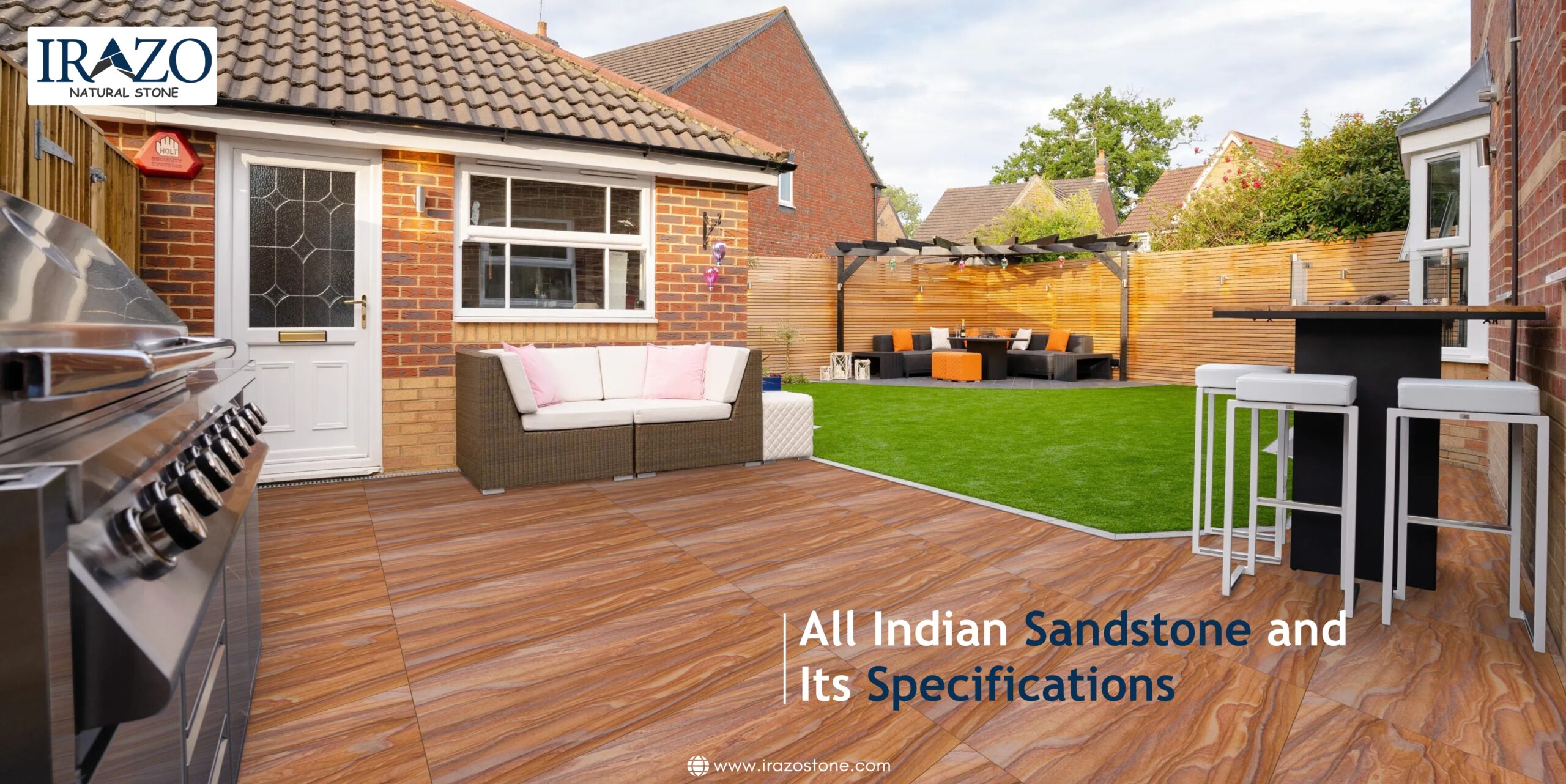
Indian sandstone comes from the earth in many colors and strengths. People use it for patios, floors, walls, and gardens because it lasts long and looks good. This stone forms over millions of years from sand grains pressed together. India has some of the best sandstone deposits in the world, especially in Rajasthan and nearby areas.
What Is Sandstone and How Does It Form?
Sandstone is a sedimentary rock. It starts as loose sand from rivers, deserts, or beaches. Over time, layers build up, and minerals like quartz, silica, or iron oxide act as cement to bind the grains. This process takes millions of years.
In India, many sandstone layers come from ancient river systems and shallow seas. The color depends on the minerals in the cement. Iron oxide gives red, brown, or yellow shades. Quartz makes it harder and lighter in color.
Indian sandstone stands out because of its mix of hardness and workability. It cuts easily but holds up well outdoors.
If you need strong and beautiful sandstone for your next project, check the range at
Irazo stone. We offer fresh blocks and finished products with zero tolerance for defects.
Key Specifications and Technical Properties of Indian Sandstone
Indian sandstone has these typical properties (values can vary slightly by type):
- Hardness: 6 to 7 on Mohs scale. It resists scratches well.
- Compressive Strength: Around 95 N/mm² or higher for good quality stone. It handles heavy loads.
- Specific Gravity: 2.2 to 2.8.
- Density: 2.2 to 2.8 g/cm³.
- Porosity: Moderate. Some types absorb water more than others, but good sealing helps.
- Water Absorption: Usually under 8% for quality grades.
- Toughness: About 3.6.
- Weather Resistance: Handles heat, cold, rain, and frost when installed properly.
These numbers make Indian sandstone suitable for both indoor and outdoor work. It does not fade easily in sunlight because of natural mineral content.
Finishes Available:
- Natural riven (rough, textured surface from quarry).
- Sawn (smooth cut edges).
- Honed (matte smooth).
- Polished (shiny).
- Tumbled (aged look with rounded edges).
- Bush hammered or flamed for grip.
Major Types of Indian Sandstone and Their Details
India produces many varieties. Here is a detailed list of popular ones:
1. Kandla Grey Sandstone
This light to medium grey stone has silvery highlights. It comes mainly from Rajasthan. The surface shows fine grains with some natural variations.
- Color: Grey with subtle tones.
- Texture: Fine to medium grain, non-slip.
- Best Uses: Modern patios, pathways, pool surrounds.
- Properties: Very durable, consistent color batches, excellent weather resistance.
2. Raj Green Sandstone
A mix of green, brown, and grey tones. It gives a natural garden feel.
- Color: Earthy greens and browns.
- Texture: Medium grain with some veining.
- Best Uses: Traditional gardens, driveways, wall cladding.
- Properties: Tight grain packing makes it tough.
3. Fossil Mint Sandstone
Light cream to beige with fossil patterns and ripples.
- Color: Minty cream with brown accents.
- Texture: Shows ancient shell or plant marks.
- Best Uses: Feature walls, patios, interior floors.
- Properties: Good strength with unique natural designs.
4. Teakwood Sandstone
Warm wood-like brown and yellow tones with straight grain patterns.
- Color: Teak brown to golden.
- Texture: Linear patterns like wood.
- Best Uses: Flooring, furniture tops, decorative pieces.
- Properties: Strong and visually warm.
5. Rainbow Sandstone
Multi-colored layers in red, brown, purple, and grey.
- Color: Striking rainbow blends.
- Texture: Layered with visible bands.
- Best Uses: Accent walls, garden features.
- Properties: Softer in some layers, needs careful selection.
6. Dholpur Beige / Pink / Red Sandstone
From Dholpur area. Beige is creamy, pink has warm tones, red is deeper.
- Colors: Beige, pink, red shades.
- Texture: Fine to medium.
- Best Uses: Historical style buildings, flooring.
- Properties: Compact and massive.
7. Agra Red Sandstone
Deep red, used in monuments like Red Fort.
- Color: Rich red.
- Texture: Fine-grained.
- Best Uses: Heritage projects, cladding.
- Properties: High compressive strength.
8. Other Varieties:
- Bansi Pink: Soft pink tones.
- Mandana: Purple-brown.
- Budhpura Grey / Chocolate.
- Sagar Black: Dark tones.
- Lalitpur Yellow: Bright yellow.
Each type comes from specific quarries in Rajasthan, Madhya Pradesh, and other states. Quarries control quality by selecting compact blocks without cracks.
At Irazo stone, we stock many of these types. Contact us for current stock and best prices on Kandla Grey, Raj Green, or custom mixes.
Colors and Textures in Indian Sandstone
Colors range from light beige and buff to grey, green, pink, red, brown, and multi-tones. Buff blends mix gold, tan, and honey. Brown mixes work with most garden plants. Grey gives a modern clean look.
Textures vary from smooth fine grain to riven with natural clefts. Some show ripples or fossil marks. This makes every slab unique. No two pieces look exactly the same, which adds character to your space.
Uses of Indian Sandstone in Construction and Landscaping
- Paving and Patios: Most common use. Non-slip surface works well even when wet.
- Driveways and Pathways: Handles vehicle weight in thicker slabs.
- Wall Cladding and Facades: Gives natural look to buildings.
- Interior Flooring: Polished or honed for homes.
- Garden Features: Steps, copings, water features, retaining walls.
- Monuments and Heritage Work: Many old Indian buildings use it.
- Pool Surrounds: Slip-resistant and cools underfoot.
It mixes well with other stones, wood, or plants. You can use it in traditional Indian homes or modern designs.
How to Choose the Right Indian Sandstone for Your Project
- Consider climate: Grey and denser types for heavy rain.
- Look at traffic: Thicker slabs for driveways.
- Match style: Warm tones for traditional, grey for modern.
- Check thickness: 22-30mm for patios, more for heavy use.
- Request samples to see the actual color variation.
Always buy from trusted suppliers who check for consistent quality.
Let the team at Irazo Stone help you select the perfect type. We offer advice based on your location and use.
Conclusion
Indian sandstone offers beauty, strength, and variety for any building or landscaping need. From Kandla Grey to Rainbow and Teakwood, each type has its own charm and specifications. With proper selection and care, it will serve you for decades.
This guide covers all major details about Indian sandstone. Use it to make informed choices.
For the best Indian sandstone products, head to Irazo Stone and transform your space with natural stone.