
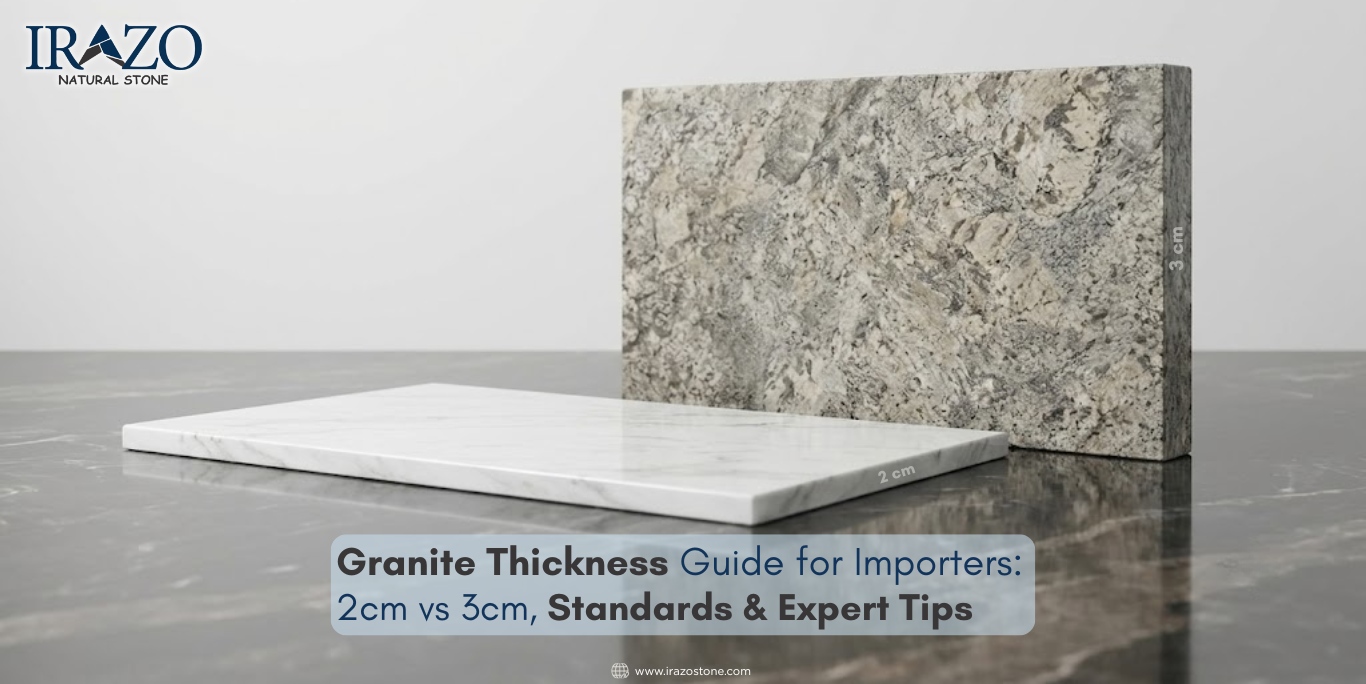
Granite thickness is one of the most important decisions importers and buyers make. It affects strength, weight, cost, shipping, and how the stone performs in the final project. Whether you import for kitchen countertops, flooring, outdoor use, or large commercial jobs, the right thickness makes a big difference in quality and value.
This complete guide explains everything about granite thickness. You will learn standard sizes, when to choose 2cm or 3cm, tolerances, container loading details, and practical advice for importers.
Why Granite Thickness Matters for Importers?
Thickness decides how strong and durable the final product will be. Thinner slabs save on shipping costs but may need extra support. Thicker slabs cost more per square meter but offer better performance and a premium look.
Key factors influenced by thickness:
- Durability and resistance to cracking
- Weight and shipping costs
- Suitability for countertops, flooring, or cladding
- Edge profile options
- Overall project cost
Indian granite exporters like Irazo Stone offer thicknesses from 10mm up to 40mm with tight tolerances. This flexibility helps importers meet different market needs.
Standard Granite Thickness Options
Here are the most common thicknesses available from Indian manufacturers:
- 10mm to 12mm: Mainly for tiles and wall cladding. Lightweight and economical for vertical applications.
- 15mm to 18mm: Used for some flooring tiles or lighter countertops. Requires good support.
- 20mm (2cm): Very popular for countertops and general use. Good balance of weight and strength. Often needs plywood backing for large spans.
- 30mm (3cm): The industry standard for premium kitchen countertops. Stronger, no extra backing needed in most cases, gives a solid, luxurious feel.
- 40mm and above: For high-end projects, outdoor applications, or heavy commercial use. Maximum durability.
Most importers order 20mm and 30mm slabs because these cover the majority of demand in residential and commercial markets.
2cm vs 3cm Granite: Detailed Comparison
2cm (20mm) Granite
- Weight: Lighter, easier to handle and ship.
- Cost: Generally lower per square meter.
- Use cases: Bathroom vanities, smaller counters, wall panels, or when budget is tight.
- Pros: More slabs per container (better shipping economics), modern slim look when edges are built up.
- Cons: May need plywood or extra reinforcement for kitchen counters. Less impact-resistant.
3cm (30mm) Granite
- Weight: Heavier but more stable.
- Cost: Higher material cost but often better long-term value.
- Use cases: Kitchen countertops, islands, outdoor kitchens, high-traffic flooring.
- Pros: Stronger, better heat and impact resistance, premium appearance, no need for backing in most installations.
- Cons: Fewer slabs per container, higher shipping weight.
For most importers supplying kitchen showrooms or contractors, 3cm is the preferred choice today. It reduces fabrication issues and gives customers a high-end product.
Granite Thickness for Different Applications
Kitchen Countertops
3cm is the top recommendation for durability and appearance. It handles daily use, cutouts for sinks and cooktops, and overhangs well. 2cm works for cost-sensitive projects but often requires edge lamination to look thicker.
Outdoor Applications
3cm or thicker is better. Outdoor kitchens face weather changes, so extra thickness reduces risk of cracking from expansion and contraction.
Flooring and Tiles
10mm to 20mm tiles are common. Thicker options provide better sound insulation and longevity in commercial spaces.
Wall Cladding and Facades
Thinner 10- 20 mm slabs save weight and cost while maintaining beauty.
Monuments and Special Projects
Custom thicker pieces up to 40mm or more.
Thickness Tolerances and Quality Standards
Good importers check tolerances carefully:
- Thickness tolerance: Usually ±1mm
- Flatness: ±0.3mm to 0.5mm
- Diagonal tolerance: ±1mm
How to Choose the Right Thickness as an Importer?
- Know your target market (residential kitchens prefer 3cm).
- Consider end use (outdoor needs thicker slabs).
- Balance cost vs performance.
- Check local building codes and fabricator preferences.
- Order samples first to verify color, finish, and thickness consistency.
- Work with suppliers who offer customization.
Indian granite offers excellent value. Suppliers like Irazo Stone provide competitive pricing, quality assurance, and flexible order sizes.
Container Loading & Shipping Impact
Granite thickness directly affects how many slabs can be loaded in a container. Thinner slabs, like 20 mm, allow more square meters per container, reducing shipping cost per unit. On the other hand, 30mm slabs are heavier, which limits the total quantity per shipment.
For importers, this creates a balance between cost efficiency and product quality. If your market prefers premium countertops, fewer 30mm slabs with higher margins may be more profitable than bulk 20mm shipments.
Understanding container weight limits and slab packing methods is essential to avoid damage and maximize shipping value.
Edge Profiles & Thickness Compatibility
Granite thickness plays a major role in the type of edge profiles that can be achieved. Thicker slabs, like 30 mm, allow for a wide variety of premium edge finishes such as bullnose, ogee, and beveled edges.
In contrast, 20mm granite often requires edge lamination (joining two pieces) to achieve a thicker look. While this reduces cost, it may slightly impact the natural appearance.
For high-end projects, importers usually prefer 30mm slabs because they allow seamless and more luxurious edge detailing.
Conclusion
Choosing the right granite thickness is a critical decision for importers, as it directly impacts product quality, cost efficiency, and customer satisfaction. While 20mm granite offers better shipping economics and suits budget-friendly projects, 30mm granite remains the preferred choice for premium applications due to its superior strength, durability, and high-end appeal.
Understanding your target market, application requirements, and total project cost – not just material price- is key to making the right decision. By selecting the appropriate thickness and working with reliable suppliers, importers can reduce risks, improve product performance, and maximize long-term profitability.
If you’re looking to import high-quality Indian granite in consistent thickness with strict quality control, partnering with an experienced exporter like Irazo Stone can help you source smarter and scale your business with confidence.