
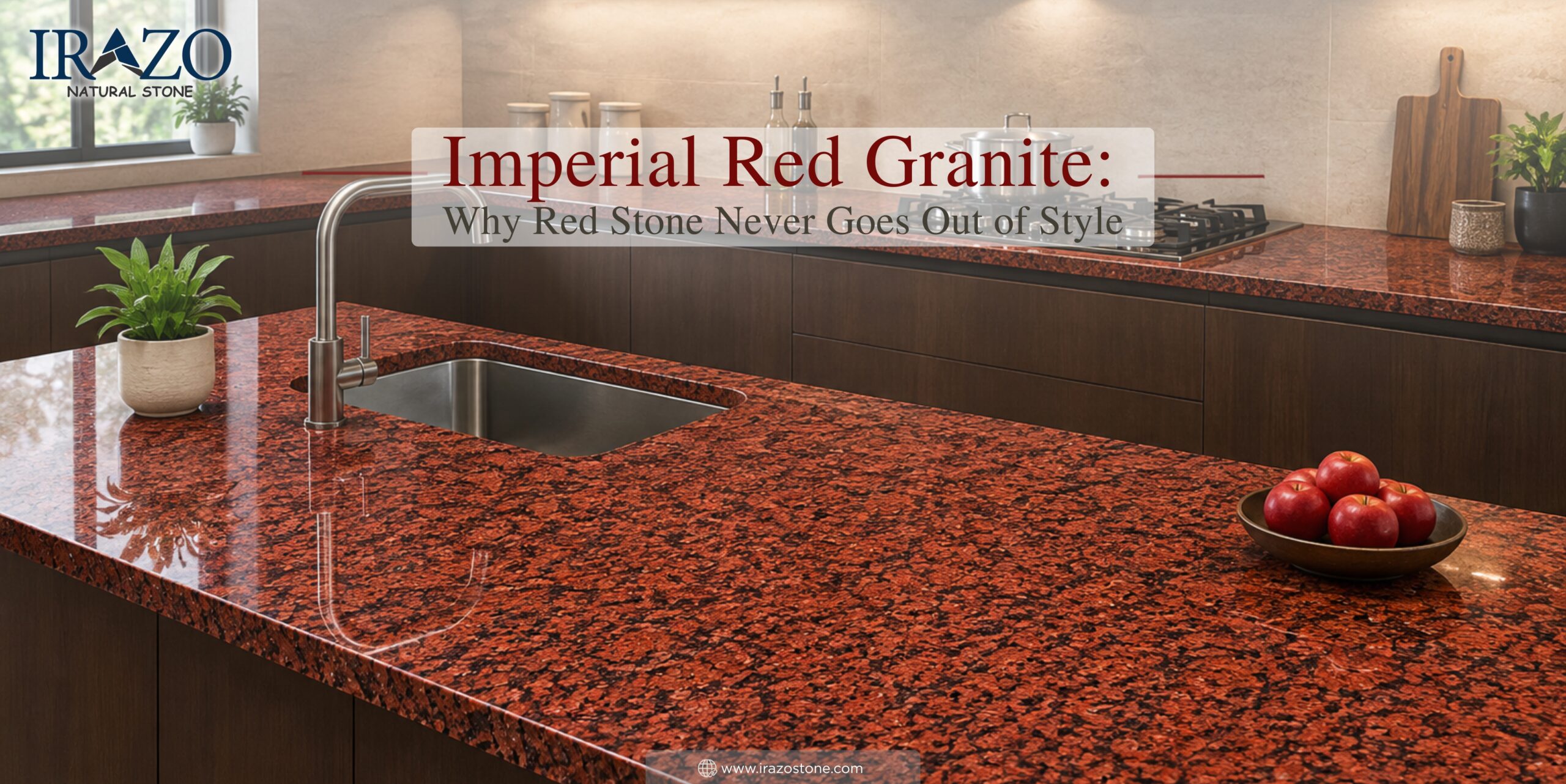
Imperial Red Granite brings warm, rich color to any space. Its deep red background with black, grey, and white specks creates a bold yet balanced look. Quarries in India, especially in Karnataka, produce this strong granite that people have used for many years.
This guide explains its features, history, applications, and reasons for lasting popularity. Learn why many choose it for homes, buildings, and more.
What Is Imperial Red Granite?
Imperial Red Granite is a natural igneous rock known for its vibrant red tones. Mines in areas like Ilkal in Karnataka yield blocks with fine grain and strong structure. The red color comes from minerals like feldspar, while dark specks add depth.
It stands out among other granites because of its warm feel and ability to work in many designs.
Key Features That Make Imperial Red Granite Special
Imperial Red Granite is a popular natural stone known for its strength, durability, and rich visual appeal. Quarried mainly in India, it is widely used in both residential and commercial projects due to its reliable performance and timeless look.
1. Rich Red Base with Natural Speckling
Imperial Red Granite features a deep red to reddish-brown base color with evenly distributed black, grey, or dark mineral speckles. These speckles are formed from natural minerals like biotite and feldspar during the stone’s formation. The consistent grain pattern gives it a balanced and attractive appearance, making it suitable for both modern and traditional designs.
2. High Hardness and Density
As a true granite, Imperial Red has high hardness (typically around 6–7 on the Mohs scale) and strong density. This makes it highly resistant to wear and suitable for heavy-use areas such as kitchen countertops, flooring, staircases, and commercial spaces. It can handle significant load and foot traffic without cracking or breaking under normal conditions.
3. Strong Resistance to Scratches, Heat, and Stains
Imperial Red Granite performs well against daily wear factors:
- Scratch resistance: Its hard surface resists scratches from regular use.
- Heat resistance: It can withstand high temperatures, making it ideal for kitchen countertops.
- Stain resistance: When properly sealed, it resists absorption of liquids and stains from common substances like oil, water, and food spills.
4. Long-Lasting Polish Retention
This granite can take a high-quality polish that enhances its natural color and mineral patterns. Once polished, the surface remains glossy for many years with minimal maintenance. It is also available in honed or flamed finishes depending on the application.
5. Excellent Weather Resistance
Imperial Red Granite is highly resistant to weather conditions such as rain, sunlight, and temperature changes. Unlike many softer stones, it does not easily fade, crack, or deteriorate when exposed to outdoor environments. This makes it suitable for exterior cladding, paving, and landscaping in various climates.
6. Consistent Performance Across Climates
Due to its dense structure and low porosity compared to many other natural stones, Imperial Red Granite performs reliably in both hot and cold climates. It shows minimal expansion or contraction with temperature changes, which helps maintain structural stability over time.
History and Popularity of Red Granite
Red stone has a much older architectural pedigree in India than granite specifically. The famous “red stone” of Indian monuments, Mughal forts, Fatehpur Sikri, parts of the Red Fort — is actually red sandstone (from Rajasthan, especially near Dholpur and Agra), not granite.
Granite as a commercial, polished decorative material is a much more modern industry, really taking off in India from the mid-20th century onward with mechanized cutting and polishing technology. So “red stones in Indian architecture for centuries” is true, but it’s important to separate that older sandstone tradition from the modern red granite trade; they’re geologically different rocks.
Where “Imperial Red” fits in
“Imperial Red” is a commercial/trade name, not a geological classification — and this is where sources genuinely disagree, which is worth being upfront about:
- Some suppliers (e.g. StoneContact listings) trace Imperial Red to quarries near Ilkal, Bagalkot district, Karnataka, also marketed as “Royal Red” or “Ilkal Red.” This variety carries deep red coloring with black, white, and gray grains, quarried in that region.
- Other trade sources instead list Imperial Red as a Rajasthan variety, featuring a striking red background with black and grey specks.
Main sources lie in Karnataka and some parts of Rajasthan and other states. Quarries produce blocks of good size with reliable color. Local processing units cut and polish them for export.
India’s granite industry ensures a steady supply of quality material.
Popular Uses of Imperial Red Granite
Residential interiors
- Kitchen countertops and islands
- Bathroom vanity tops and countertops
- Flooring (living rooms, foyers, hallways)
- Staircases and stair treads
- Fireplace surrounds and hearths
- Window sills and door thresholds
- Accent/feature walls
- Tabletops (dining tables, side tables)
- Skirting and border inlays alongside contrasting stone
Residential exteriors
- Facade cladding
- Garden paving, walkways, and patios
- Pool surrounds and coping
- Outdoor steps
- Boundary/compound walls
- Planters and garden edging
- Outdoor fountains
Commercial and institutional buildings
- Lobby and reception flooring (hotels, corporate offices, banks)
- Facade cladding on office buildings and retail storefronts
- Reception desks and counters
- Elevator surrounds
- Signage plinths and building nameplates
Religious and cultural structures
- Temple flooring and plinths
- Pillars and columns
- Deity pedestals and altar surfaces
- Temple boundary walls and gateways (gopurams)
- Ashram and community hall flooring
Memorial and funerary use
- Gravestones and headstones
- Cemetery markers
- Memorial plaques
- Mausoleum cladding
- War memorials and commemorative monuments
Public infrastructure and landscaping
- Plaza and public square paving
- Park pathways and benches
- Curbstones and cobblestones
- Retaining walls
- Statue bases and pedestals in public spaces
- Bus stop or metro station cladding (in some Indian cities)
Decorative and craft applications
- Sculptures and carved artifacts
- Handicraft items (bowls, vases, small decorative pieces)
- Mosaic and inlay work combined with other colored stones
- Coasters and small tabletop decor items (from offcut material)
Why Red Granite Stays in Style
Red granite offers timeless appeal because:
- Warm color adds life to spaces.
- Natural patterns hide everyday marks.
- Strength suits busy areas.
- Versatility works with many design trends.
- Bold presence makes statements without extra decoration.
Conclusion
Imperial Red Granite proves that red stone holds strong appeal across time. Its color, strength, and versatility explain why designers and builders keep choosing it. From kitchens to monuments, it delivers beauty and performance.
For projects that need warmth and lasting quality, Imperial Red Granite remains an excellent choice.
Irazo Stone supplies premium Imperial Red Granite processed to high standards. We support your needs from selection to delivery.