
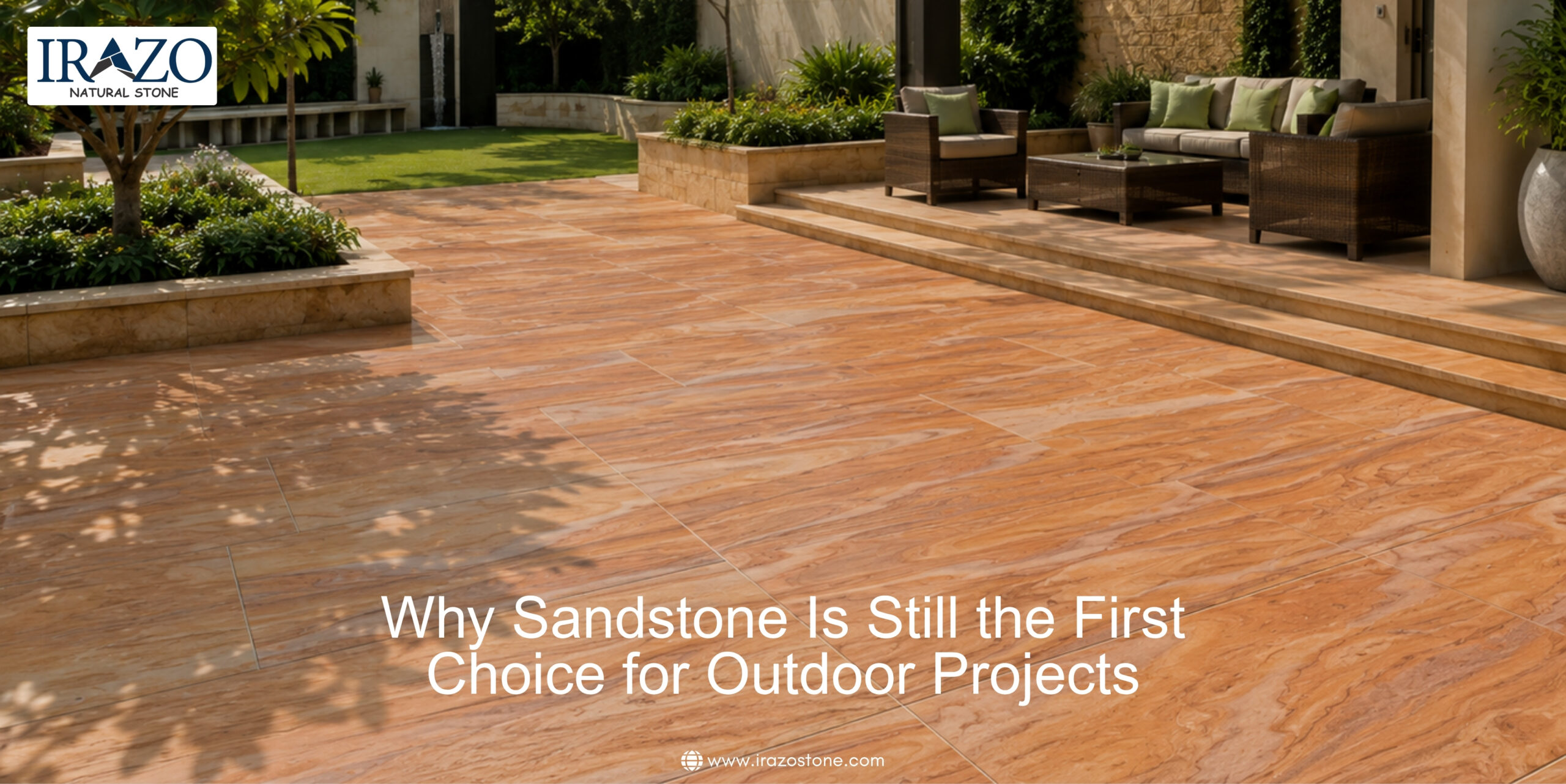
Sandstone remains a favorite for outdoor work because of its natural strength and good looks. This stone comes from layers of sand pressed over time. It offers warm earth tones and textured surfaces that fit gardens, patios, and building exteriors. India produces large amounts of quality sandstone that stands up to weather.
This guide explains why many pick sandstone for outside areas, its features, types, and uses. Use it to decide for your next project.
1. Natural Formation and Composition of Sandstone
Sandstone is a sedimentary rock formed over millions of years through the compression of sand-sized mineral particles, primarily quartz and feldspar. These particles are bonded together by natural cementing materials such as silica, calcium carbonate, or iron oxide.
The composition of sandstone plays a major role in its performance:
- Quartz-based sandstone is highly durable and resistant to weathering
- Iron-rich sandstone gives warm red and brown tones
- Calcium-based sandstone is softer and easier to cut
This natural formation process gives sandstone its unique strength, texture, and color variations, making it ideal for outdoor environments.
2. Timeless Aesthetic Appeal
One of the biggest reasons sandstone remains popular is its natural and timeless look. Unlike artificial materials, sandstone offers organic textures and color variations that enhance outdoor spaces.
Common sandstone colors include:
- Beige and cream for neutral designs
- Red and brown for warm, earthy tones
- Yellow and gold for vibrant outdoor settings
- Grey for modern landscaping
Its ability to blend seamlessly with natural surroundings makes it ideal for gardens, patios, and exterior architecture. No two pieces are identical, which adds character and uniqueness to every project.
3. High Durability for Outdoor Use
Durability is one of the most important factors when selecting materials for outdoor applications. Sandstone, especially high-quality quartz-rich varieties, offers excellent strength and long-term performance.
Key durability features:
- Resistant to surface wear and foot traffic
- Maintains structure under varying temperatures
- Long lifespan when properly installed
- Suitable for residential and commercial use
While sandstone is not as hard as granite, it provides sufficient strength for most outdoor applications, especially when the right thickness and density are chosen.
4. Weather Resistance and Climate Adaptability
Outdoor materials must perform well under different weather conditions. Sandstone is known for its ability to withstand:
- Sun exposure without significant fading
- Moderate rain and moisture conditions
- Temperature fluctuations in many climates
Dense sandstone varieties perform particularly well in outdoor environments when sealed correctly. Proper installation and drainage also enhance its weather resistance.
It is important to note that sandstone performs best in climates that are not extremely freeze-thaw intensive unless properly treated.
With Irazo Stone, clients receive expert guidance on selecting the right sandstone type based on climate conditions, ensuring long-lasting outdoor performance.
5. Naturally Slip-Resistant Surface
Safety is a critical consideration in outdoor spaces, especially in areas exposed to water such as pool decks, pathways, and patios.
Sandstone offers a naturally textured surface that provides:
- Good grip underfoot
- Reduced risk of slipping when wet
- Safe walking conditions for residential and commercial spaces
Finishes like natural riven, sandblasted, and brushed further enhance slip resistance, making sandstone a practical and safe choice.
6. Versatility in Outdoor Applications
Sandstone is one of the most versatile natural stones available. It can be used in a wide range of outdoor applications, including:
- Garden pathways and walkways
- Patios and outdoor seating areas
- Wall cladding and facades
- Pool surrounds
- Outdoor steps and staircases
- Landscaping features and retaining walls
Its ease of cutting and shaping allows for custom designs, making it suitable for both traditional and modern architecture.
Irazo Stone supports customization in size, thickness, and finish, helping clients execute diverse project requirements with precision.
7. Ease of Installation and Workability
Compared to harder stones like granite, sandstone is relatively easier to cut and shape. This makes installation more efficient and cost-effective.
Advantages include:
- Faster cutting and processing
- Easier handling on-site
- Compatibility with various laying patterns
- Reduced labor time
This workability makes sandstone a preferred choice for contractors and fabricators working on large outdoor projects.
8. Cost-Effective Natural Stone Option
Sandstone is generally more affordable compared to premium stones like marble and granite, making it a cost-effective option for outdoor projects.
Cost advantages:
- Lower material cost
- Reduced installation expenses
- Long lifespan reduces replacement costs
- Suitable for large-area coverage
This balance of affordability and performance makes sandstone ideal for both residential and commercial developments.
9. Low Maintenance Requirements
Outdoor materials should require minimal maintenance, and sandstone performs well in this aspect when properly treated.
Maintenance tips:
- Periodic cleaning with water and mild detergents
- Sealing to prevent moisture absorption
- Avoiding harsh chemicals
When maintained correctly, sandstone retains its appearance and functionality for years.
10. Sustainability and Eco-Friendliness
Sandstone is a natural material that requires less processing compared to engineered alternatives, making it an environmentally responsible choice.
Sustainability benefits:
- Natural and recyclable material
- Lower energy consumption during processing
- Long lifecycle reduces environmental impact
Its use supports sustainable construction practices, especially when sourced responsibly.
11. Proven Track Record in Architecture
Sandstone has been used in construction for centuries, proving its reliability and long-term performance.
Famous examples include:
- Historic forts and monuments in India
- Traditional European architecture
- Heritage buildings across the world
These structures demonstrate sandstone’s ability to withstand time, weather, and usage while maintaining its aesthetic appeal.
With Irazo Stone, clients benefit from this legacy combined with modern processing and export standards.
12. Why India Is a Leading Source of Sandstone
India is one of the largest producers and exporters of sandstone in the world. Regions like Rajasthan are known for high-quality sandstone with consistent color and density.
Advantages of Indian sandstone:
- Wide variety of colors and finishes
- Strong global supply chain
- Competitive pricing
- Skilled craftsmanship
Indian sandstone is widely used in international markets due to its reliability and availability.
Conclusion
Sandstone continues to be the first choice for outdoor projects because it offers a perfect combination of natural beauty, durability, versatility, and cost-effectiveness. Its proven performance over centuries makes it a reliable material for modern construction as well.
While new materials may offer alternatives, sandstone stands out for its authenticity and long-term value. Whether for residential landscaping or large commercial developments, it remains a smart investment.
For those looking to source high-quality sandstone, Irazo Stone provides trusted solutions with premium materials, expert support, and global export experience—ensuring your outdoor projects achieve both durability and design excellence.