
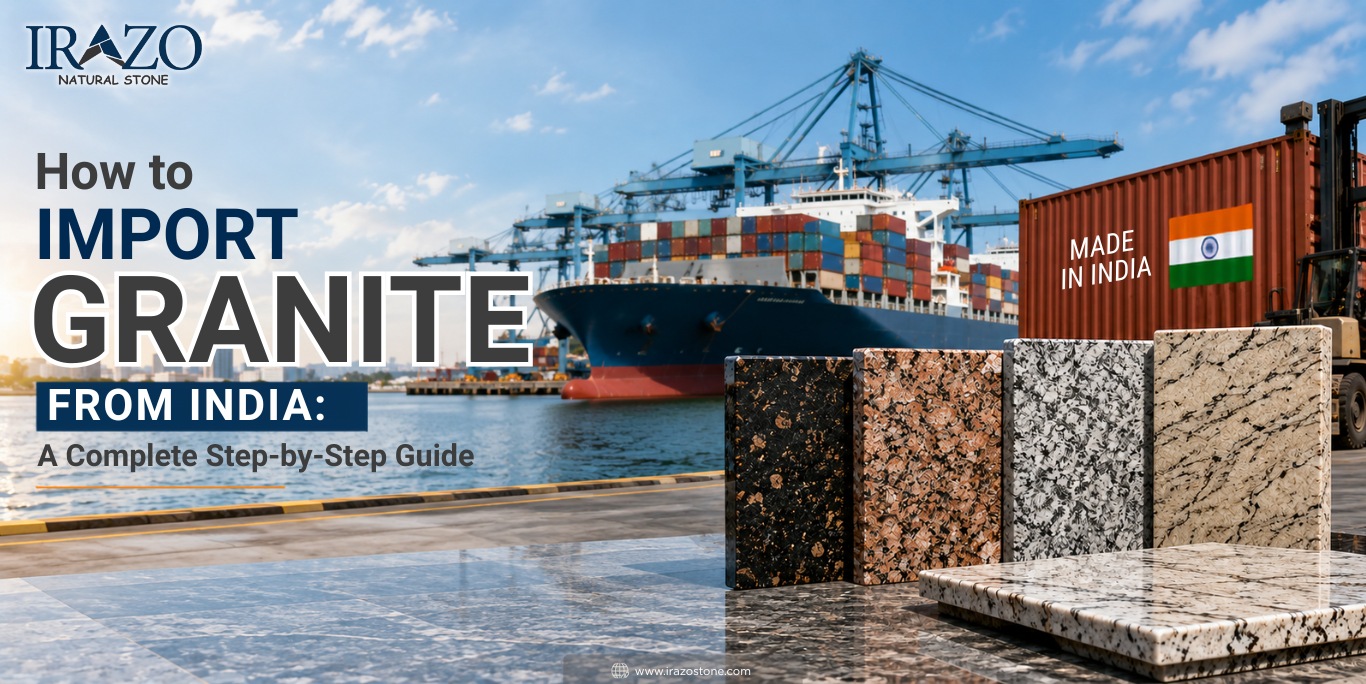
Granite is a strong natural stone used in kitchens, floors, walls, and outdoor spaces. Many people and companies around the world want to buy it from India because of the good quality and many color choices. India produces and sells a lot of granite to other countries.
This guide explains every part of importing granite from Indi. You will learn about types of granite, how to find good suppliers, all the steps, papers you need, shipping, costs, and problems you might face. The information comes from current rules and practices as of 2026.
Why Choose Granite from India?
India has large areas of granite rock. Quarries in states like Andhra Pradesh, Rajasthan, Tamil Nadu, Karnataka, and Gujarat produce many types of granite. Indian granite is known for its hardness, beautiful patterns, and ability to take a good polish. It lasts a long time and works well for homes and big building projects.
Buyers like Indian granite because it costs less than stone from some other places while keeping high quality. Exporters send slabs, tiles, blocks, and finished pieces to the USA, Europe, UK, Middle East, Australia, and more. Recent changes, such as adjustments in GST rates for the stone business, help keep prices competitive.
India sends out millions of tons every year. Popular colors and consistent supply make it a top choice for importers.
Step-by-Step Process to Import Granite from India
Step-by-Step Process to Import Granite from India
Step 1: Define Your Requirements
Decide on type, color, size, finish, quantity, and use (countertops, flooring, monuments, etc.). Calculate how much you need, including waste. Think about your local market rules and customer preferences.
Step 2: Get Quotes and Samples
Contact several suppliers. Ask for FOB or CIF prices. Order small samples first to check color and quality in person.
Step 3: Place Order and Make Agreement
Use a clear purchase order. Agree on price, payment terms (often 30% advance, balance against documents or LC), delivery terms (FOB, CIF), and timelines. Include quality standards and inspection rights.
Step 4: Production and Quality Control
Supplier cuts and processes the stone. Good companies do in-house checks. You or a hired inspector should check before packing. Look for cracks, color matching, thickness uniformity, and polish quality.
Step 5: Documentation and Export Clearance
The exporter prepares papers (more details below). They handle Indian customs.
Step 6: Shipping and Import Clearance
Stone travels by sea in containers. You handle arrival, customs, and local transport.
Step 7: Delivery and After-Sales
Inspect upon arrival. Resolve any issues with the supplier.
The whole process usually takes 8-12 weeks or more, depending on production and shipping.
Let Irazo Stone manage production, quality, and documentation for you. Their experience makes the import process smoother.
Required Documentation for Granite Import
From the Indian exporter side:
- Commercial Invoice (with quantity in weight and volume, description, value).
- Packing List.
- Bill of Lading (or Airway Bill if air).
- Certificate of Origin (for preferential duties).
- Test certificates or quality reports.
- GST invoice and shipping bill.
- Fumigation certificate for wooden packing if needed.
- Insurance certificate (for CIF terms).
Importer side (depends on your country):
- Import declaration forms.
- Customs bond (e.g., in USA).
- Payment of duties and taxes.
- Phytosanitary or other specific permits if required (rare for granite).
No special import license is needed for granite in many countries like the USA. Use correct HS codes (e.g., 2516 for rough, 6802 for worked granite).
Keep records for any audits.
Quality Standards, Inspection, and Specifications
Good granite should meet international norms for strength, durability, and finish. Key checks:
- No major cracks or pits.
- Uniform thickness.
- Proper polishing without scratches.
- Color consistency within batches.
- Low water absorption for outdoor use.
Use third-party inspectors like SGS if buying large volumes. Suppliers like Irazo Stone follow strict in-house controls.
Ask for material safety data and compliance with your local building codes.
Legal and Regulatory Requirements (2026 Updates)
Indian exporters need GST registration, IEC, and follow DGFT rules. Granite exports are generally free, but follow environmental and mining laws.
Importers: Follow your country’s customs, pay duties/VAT, and meet safety standards. Recent global trade changes, including tariff adjustments in some markets, affect final costs. Always check current rules.
Conclusion
Importing granite from India can be straightforward and profitable when done right. Follow the steps, choose reliable partners, and pay attention to details for good results. With the right supplier, you get quality stone at competitive prices for your projects or business.
Ready to import high-quality granite? Visit irazostone today. Explore our collection, request quotes, or contact their team for personalized help. We provide premium Indian granite with reliable service to buyers worldwide.