
Makrana White Marble stands as one of the finest natural stones from India. People know it for pure white color, strength, and ability to take beautiful polish. Quarries in Makrana, Rajasthan, have supplied this marble for hundreds of years. It appears in famous buildings and modern projects around the world.
This guide explains what makes Makrana White Marble special, its history, features, and who buys it. Read on to understand why many choose it for their work.
History of Makrana White Marble
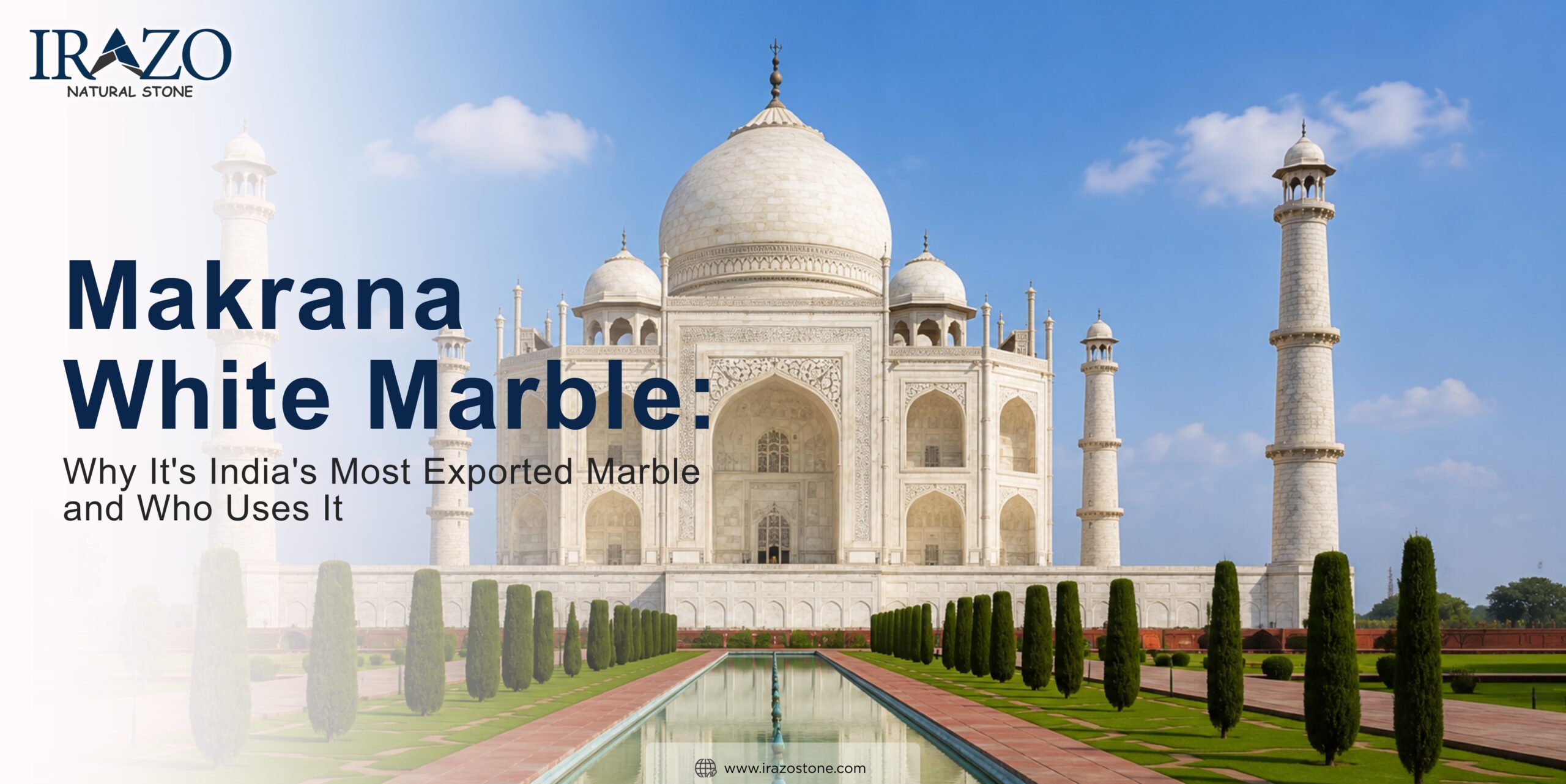
Makrana holds the oldest marble quarries in India. Mining started many centuries ago. The marble gained fame when builders used it for the Taj Mahal in Agra. Shah Jahan chose Makrana stone for its pure white look and lasting quality.
Over time, it appeared in other important places like Victoria Memorial in Kolkata, temples, palaces, and monuments. In 2015, it received Geographical Indication (GI) status. This recognition protects its name and quality. The International Union of Geological Sciences also listed it as a Global Heritage Stone Resource.
Today, Makrana continues to produce stone that meets both traditional and new needs.
What Makes Makrana White Marble Special
1. Exceptional Purity and Composition
Makrana marble is primarily composed of calcite and contains an exceptionally high calcium carbonate content—often around 98% or more. This high purity level means the stone has very few impurities such as silica, clay, or iron oxides, which are commonly found in other marbles. As a result, it maintains a consistent color and superior structural integrity.
2. Naturally Bright White Appearance
One of the most attractive features of Makrana marble is its pure white color. Premium grades have minimal veining, with only slight grey or pink lines, giving it a clean and elegant look. This natural brightness makes it highly desirable for luxury interiors, temples, monuments, and high-end architectural projects.
3. High Density and Strength
Makrana marble is known for its dense structure, which makes it extremely strong and durable. Unlike softer marbles, it can withstand heavy foot traffic and harsh environmental conditions without cracking or deteriorating easily. This strength is one of the reasons why structures built with Makrana marble have lasted for centuries.
4. Long-Lasting Polish and Shine
Another key advantage is its ability to hold polish for a very long time. Once polished, Makrana marble develops a smooth, glossy finish that enhances its natural beauty. Unlike many other marbles, it does not lose its shine quickly, making it a cost-effective choice in the long run.
5. Low Porosity and Water Absorption
Makrana marble has very low porosity, meaning it absorbs very little water. This property makes it resistant to stains, moisture damage, and weathering. It performs exceptionally well in both indoor and outdoor applications, including flooring, wall cladding, and even exterior facades.
6. Natural Translucency
A unique feature of Makrana marble is its slight translucency. When exposed to light, it allows a soft glow to pass through, creating a warm and luxurious visual effect. This characteristic adds depth and richness to interiors, especially in well-lit spaces.
7. Minimal Chemical Treatment Required
Unlike many modern stones that require heavy chemical processing or resin filling, Makrana marble performs well in its natural form. Its inherent strength and low impurity levels reduce the need for artificial enhancements, making it a more natural and eco-friendly option.
8. Excellent Weather Resistance
Makrana marble is highly resistant to extreme weather conditions. Whether exposed to heat, rain, or temperature fluctuations, it maintains its structure and appearance over time. This makes it suitable for both indoor and outdoor use without compromising quality.
Irazo Stone selects blocks with these strong features. Our processing brings out the best shine and finish.
Varieties of Makrana Marble
Mines produce different types:
1. Makrana Pure White (Chausira)
This is the highest-grade Makrana marble. It has a bright white base with almost no visible veins or color variation. Due to its uniform appearance and purity, it is mainly used in monuments, temples, and premium flooring projects.
2. Makrana White (Light Veins)
This variety has a white base with light grey or slightly pink veins. It offers a natural look while still maintaining a clean appearance. It is commonly used for flooring, wall cladding, and residential interiors.
3. Makrana Albeta Marble
Albeta marble features a white background with more noticeable grey or black patterns. It provides a stronger visual contrast compared to plain white marble and is often used for decorative flooring and statement walls.
4. Other Patterned Varieties
Some Makrana marble types come with mixed patterns and shades, including subtle waves or lines. These are generally used where design and texture are preferred over a completely plain look.
Each variety suits specific projects. Pure white works for monuments and luxury floors while patterned ones add interest to walls.
Why Makrana White Marble Leads in Exports?
Several reasons explain its popularity in foreign markets:
- Consistent quality and pure color attract buyers who want premium look.
- Proven durability from historical buildings builds trust.
- Good block sizes allow large pieces with fewer joints.
- Competitive pricing compared to similar European marbles.
- Established export network from Rajasthan.
It travels to Persian Gulf countries, Europe, Southeast Asia, Canada, Pakistan, Russia, and more. Demand stays steady because of its heritage value and practical benefits.
Irazo Stone contributes to these exports with strict quality checks and proper packing. We ship Makrana marble safely to many countries.
Who Uses Makrana White Marble?
Different groups choose this stone for various reasons.
1. Monument and Temple Builders
Its use in Taj Mahal and recent projects like Ram Mandir shows its importance in religious and heritage work. The white color stands for purity and peace.
2. Luxury Homes and Hotels
Interior designers use it for flooring, walls, countertops, and staircases. It makes spaces feel bright and elegant.
3. Sculptors and Artists
The fine grain allows detailed carving for statues, fountains, and decorative pieces.
4. Commercial Projects
Offices, malls, and public buildings use it for durable, attractive surfaces that handle foot traffic.
5. Exporters and Importers
Traders worldwide stock it because of steady demand and good margins.
Applications of Makrana White Marble
- Flooring and wall cladding
- Kitchen and bathroom countertops
- Exterior facades and landscaping
- Carvings, mosaics, and inlays
- Tombs, memorials, and fountains
Comparison with Other White Marbles
Makrana often stands out due to lower porosity and natural purity. Other Indian marbles may need more treatment or show more variation. Its heritage adds extra value for prestige projects.
While some modern marbles offer new patterns, Makrana remains a timeless choice for classic beauty.
Conclusion
Makrana White Marble earns its place as India’s most exported marble through pure color, strength, and rich history. From the Taj Mahal to modern luxury homes, it continues to impress. Its features suit many uses while exports bring Indian craftsmanship to the world.
If you look for authentic white marble with proven quality, Makrana remains a top pick.